
Two Very Different EVs, One Budget: Comparing the 2026 Nissan Leaf and 2026 Hyundai Kona Electric
August 25 2026,
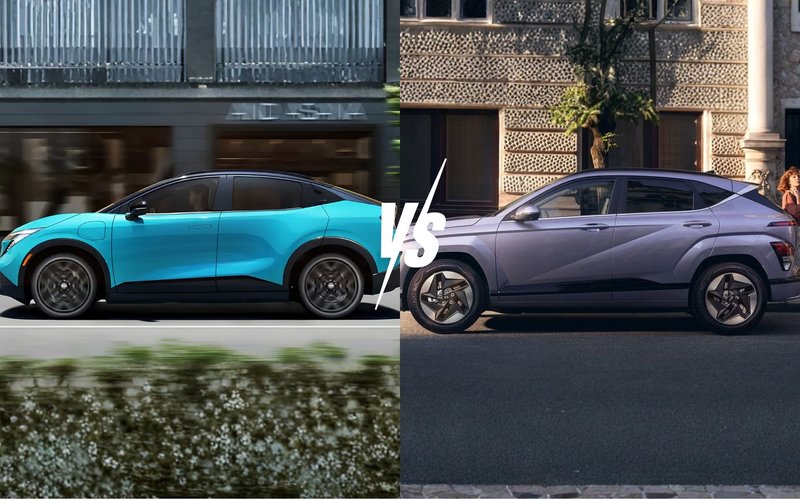
People assume small EVs are all more or less the same once you strip away the badge, but the LEAF vs KONA Electric comparison says otherwise. The LEAF pushes harder with more horsepower, more torque, a larger touchscreen, and additional airbags, while the KONA Electric plays the efficiency card with better range per charge, extra cargo space, and a lower price to start. The details end up mattering a lot.
261 LB-FT Makes Its Point Quickly

Electric torque is one of those numbers you can actually feel, and there is a sizeable difference here. The 2026 Nissan LEAF produces 214 horsepower and 261 lb-ft of torque, while the 2026 Hyundai KONA Electric delivers 201 horsepower and 188 lb-ft of torque. That gives the Nissan an advantage of 13 horsepower and 73 lb-ft of torque. Both deliver the smooth, immediate response associated with an electric powertrain, but the LEAF's higher torque figure gives it a particularly strong spec on paper for everyday acceleration and merging.
Efficiency Stays Within a Tenth
The extra output does not put the Nissan far behind when energy consumption enters the conversation. In the 2026 Nissan LEAF vs 2026 Hyundai KONA Electric matchup, the LEAF is rated at 1.9 L/100 km city, 2.2 highway, and 2.1 combined. The KONA Electric records 1.8 L/100 km city, 2.3 highway, and 2.0 combined. Hyundai takes a slim 0.1 Le/100 km advantage in combined efficiency, while Nissan actually posts the lower highway figure. In other words, the efficiency gap remains remarkably small despite the LEAF offering substantially more torque.
14.3 Inches Changes the Dashboard

Here is one difference you will notice every time you get behind the wheel. The 2026 Nissan LEAF features a 14.3-inch touchscreen, compared with the 12.3-inch touchscreen in the 2026 Hyundai KONA Electric. Both systems support Apple CarPlay and Android Auto and are paired with six-speaker audio systems. Navigation and wireless charging are also available in both referenced models, while the Nissan adds in-car Wi-Fi to its feature list. Hyundai's 12.3-inch display is already generously sized, but Nissan stretches the interface another two inches for an even larger digital command centre.
Ten Airbags Add Another Layer
Safety brings another clear distinction between these two EVs. The 2026 Nissan LEAF is listed with 10 airbags, including front, side, side-curtain, and knee airbags. The 2026 Hyundai KONA Electric is listed with six airbags, covering front, side, and side-curtain protection. Hyundai currently has more completed crash-test information in the supplied data, including a 4-star NHTSA overall rating, 4-star frontal crash rating, and 4-star rollover rating. The crash-test cycle for the referenced LEAF SV+ is not yet complete, so a direct overall rating comparison cannot currently be made.
Cargo Space Favours the KONA
The 2026 Nissan LEAF vs 2026 Hyundai KONA Electric comparison flips direction when you start loading the back. The KONA Electric provides 723 litre of cargo room behind the rear seats and 1,803 litre with them folded. The LEAF provides 566 litre behind the rear seats and up to 1,572 litre with its rear seats stowed. That gives Hyundai an extra 157 litre with all five seats available and 231 litre at maximum capacity. Both remain practical five-seat EVs, but Hyundai makes particularly good use of its cargo area.
|
Key Highlight |
2026 Nissan LEAF |
2026 Hyundai KONA Electric |
|
Power |
214 horsepower / 261 lb-ft |
201 horsepower / 188 lb-ft |
|
Combined Efficiency |
2.1 L/100 km |
2.0 L/100 km |
|
Touchscreen |
14.3 inches |
12.3 inches |
|
Maximum Cargo Space |
1,572 litre |
1,803 litre |
|
Airbags |
10 |
6 |
The LEAF Is Parked at 401 Dixie Nissan. Your Move
Ten airbags, a 14.3-inch screen, and a motor that actually has some punch to it, that's a lot to just take our word for. Come see it yourself, ask our team anything, and decide from the driver's seat instead of a comparison chart.
